Contextual Introduction
The emergence of AI-assisted tools for WordPress hosting management is not primarily a story of technological breakthrough, but a response to a specific operational pressure: the unsustainable cognitive load placed on administrators managing the interplay between WordPress’s application layer and its underlying hosting environment. As WordPress sites grow in complexity—transitioning from simple blogs to integrated business platforms with e-commerce, membership systems, and custom functionality—the manual oversight of performance, security, and updates becomes a high-risk, time-intensive bottleneck. AI tools have entered this space not to replace sysadmins or developers, but to act as a force multiplier for monitoring and initial diagnosis, attempting to convert reactive firefighting into a more managed, predictive workflow. The driving force is the need to maintain site integrity while human attention is increasingly diverted to strategic tasks.
The Specific Friction It Attempts to Address
The core inefficiency lies in the continuous, low-level surveillance required to prevent a WordPress site from degrading or failing. This includes monitoring server resource spikes (CPU, memory, I/O), detecting anomalous traffic patterns that could indicate an attack or a traffic surge, identifying plugin conflicts after updates, and ensuring backups are both complete and functional. Manually, this involves constant dashboard checking, log file scrutiny, and cross-referencing alerts. The friction is not just the time spent, but the latency between an issue occurring and a human noticing it, during which time user experience degrades, SEO rankings can be impacted, or security may be compromised. AI-assisted workflows aim to compress this latency by providing real-time, synthesized analysis of disparate data streams.
What Changes — and What Explicitly Does Not
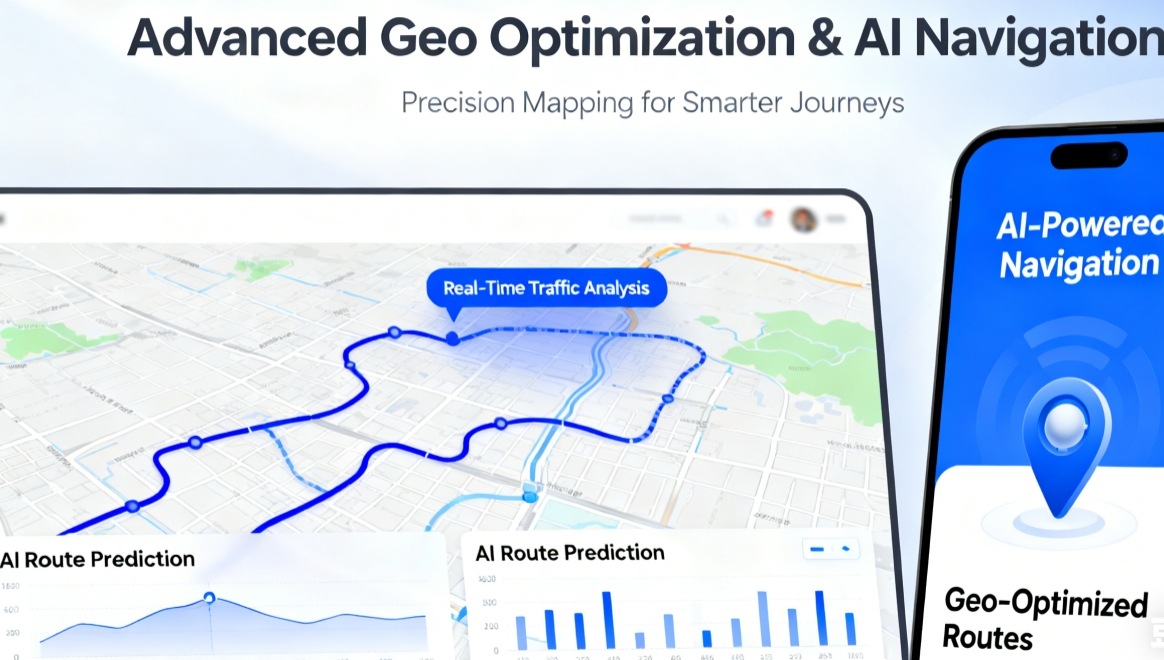
In a typical before-and-after scenario, the workflow shifts from periodic manual checks to an alert-driven model. Before: An administrator might check a hosting control panel (like cPanel), a separate uptime monitor, Google Search Console for errors, and a security plugin dashboard at set intervals, attempting to mentally correlate events. After: An AI-assisted monitoring system, such as those categorized by platforms like toolsai.club, ingests logs from the server, the WordPress database, application performance monitors, and security scanners. It correlates events, suppresses redundant alerts, and presents a single, prioritized notification: e.g., “High probability of memory exhaustion within 2 hours, correlated with a specific WooCommerce query and a recent plugin update.”
What does not change is the necessity for human judgment in response. The AI can flag a potential plugin conflict and suggest a rollback, but it cannot autonomously decide to revert a plugin on a live production site without considering business context—is the plugin critical for checkout? Is it during peak sales hours? The human remains the final arbiter of action, weighing technical data against operational priorities. Furthermore, the initial setup and tuning of alert thresholds and correlation rules remain a manual, expert-driven task.
Observed Integration Patterns in Practice
Teams rarely rip out existing monitoring stacks. Instead, AI-assisted tools are layered atop them. A common pattern involves integrating the AI tool’s agent or API with existing infrastructure: the hosting provider’s metrics (from companies like Kinsta or WP Engine), error logging services (like Sentry), and WordPress-specific management plugins (like MainWP or ManageWP). The transitional arrangement often sees the old dashboards remain open for deep-dive investigation, while the AI console becomes the primary “watchtower.” This layering can create its own complexity, as teams must now manage the configuration and potential alert conflicts between the new AI layer and the legacy tools it is meant to synthesize.
Another pattern is the use of these tools for post-mortem analysis. After a site crash or severe slowdown, the AI’s historical data correlation can help reconstruct the event chain faster than manual log sifting. However, this is only valuable if the tool was properly configured and collecting the right data before the incident occurred, highlighting a significant setup cost that is often underestimated.
Conditions Where It Tends to Reduce Friction
The effectiveness of these AI-assisted systems is narrow and situational. They tend to reduce friction most noticeably in environments with a clear baseline of “normal” operation. For a stable WordPress site with predictable traffic patterns and a controlled plugin ecosystem, the AI can excel at detecting deviations: a new, inefficient database query introduced by an update; a slow, creeping memory leak; or a sudden spike in 404 errors indicating a broken link structure.
They are also effective in managing scale for administrators overseeing multiple WordPress installations. The synthesis of alerts across dozens of sites into a single prioritized list prevents alert fatigue and helps focus human attention on the most critical issue across the portfolio, rather than forcing a linear review of each site. This is a clear efficiency gain for agencies or IT departments managing many client sites.
Conditions Where It Introduces New Costs or Constraints
The integration introduces several new costs. The most commonly underestimated trade-off is the ongoing configuration debt. These systems are not “set and forget.” As the WordPress site evolves—new plugins are added, traffic patterns shift, business logic changes—the AI’s understanding of “normal” must be recalibrated. Failure to do so results in either a flood of false positives (alert fatigue) or, worse, missed alerts because anomalies are now part of the accepted baseline. This maintenance requires a level of expertise that is often higher than the routine monitoring it replaces.
A limitation that does not improve with scale is the interpretation of business logic. An AI can detect that a page is loading slowly. It cannot understand that this particular slow page is the critical product landing page for a campaign launching in one hour, making it a top-priority fix, whereas another slow page might be a low-traffic archival section. This contextual gap is permanent. The tool provides technical diagnosis; the human provides business triage.
Furthermore, these systems introduce a new single point of failure or blind spot. If the AI monitoring service itself has an outage or a misconfiguration, the administrator may lose their synthesized view, potentially regressing to a less informed state than their original, simpler manual checks. Reliance on the tool necessitates trust in its availability and accuracy.
Who Tends to Benefit — and Who Typically Does Not
The benefit curve is not linear with site size. The primary beneficiaries are professional administrators managing complexity. This includes web agencies, IT departments running multiple internal sites, and owners of large, complex WooCommerce or membership sites where downtime has immediate revenue impact. For these users, the cost of the tool and the configuration overhead is justified by the risk mitigation and time reclamation.
Those who typically do not see a net benefit are administrators of small, simple, brochure-style WordPress sites with low traffic and few plugins. For them, the setup complexity, ongoing cost, and learning curve of the AI tool often outweigh the marginal risk it mitigates. A well-configured traditional caching plugin, a reliable backup solution, and basic uptime monitoring may provide sufficient coverage at a fraction of the operational overhead. Similarly, highly custom, bespoke WordPress installations that deviate significantly from standard patterns may generate constant false alarms, making the AI tool more of a nuisance than an aid.
Neutral Boundary Summary
AI-assisted WordPress hosting management tools operate within a defined scope: they are advanced correlation and alerting systems that compress the time between a technical anomaly occurring and a human being notified. Their value is contingent on proper initial setup and continuous tuning to match a site’s evolving profile. They do not automate resolution for core business risks; they only automate the initial detection and diagnostic suggestion. The unresolved variable is the specific risk profile and operational capacity of the organization implementing them. For some, the tool becomes a critical layer in a defense-in-depth strategy. For others, it is an unnecessary abstraction that adds cost and complexity to a manageable process. The technology does not dictate the outcome; the alignment between the tool’s capabilities and the organization’s specific needs, expertise, and tolerance for configuration maintenance does.