One developer spent roughly four years learning to code, draw pixel art, compose music and design a farming game. In February 2016, he released it. By December 2024, Stardew Valley had sold more than 41 million copies across platforms, according to its official press materials. The lesson is not that every solo developer can create a global hit. It is that a focused product, a clearly defined audience, unusually deep craft and years of patient iteration can create an asset far larger than a conventional freelance business.
1. Who Is Eric Barone?
Eric Barone, better known online as ConcernedApe, is an American independent game developer. He created Stardew Valley as a solo project and taught himself the skills required to make it: programming, pixel art, music, writing and game design. The official press kit describes the four-year solo-development period and identifies Barone as the creator. In a 2016 PC Gamer interview, he said he had little coding experience and had never made pixel art when he began; he repeatedly rebuilt early work as his skills improved.
His starting point was not a large studio or a venture-backed company. Contemporary reporting described him as working part-time as a theater usher while developing the game. That detail matters: the project was built alongside ordinary work, not launched with a large production budget.
2. The Product: A Familiar Genre, Rebuilt With Care
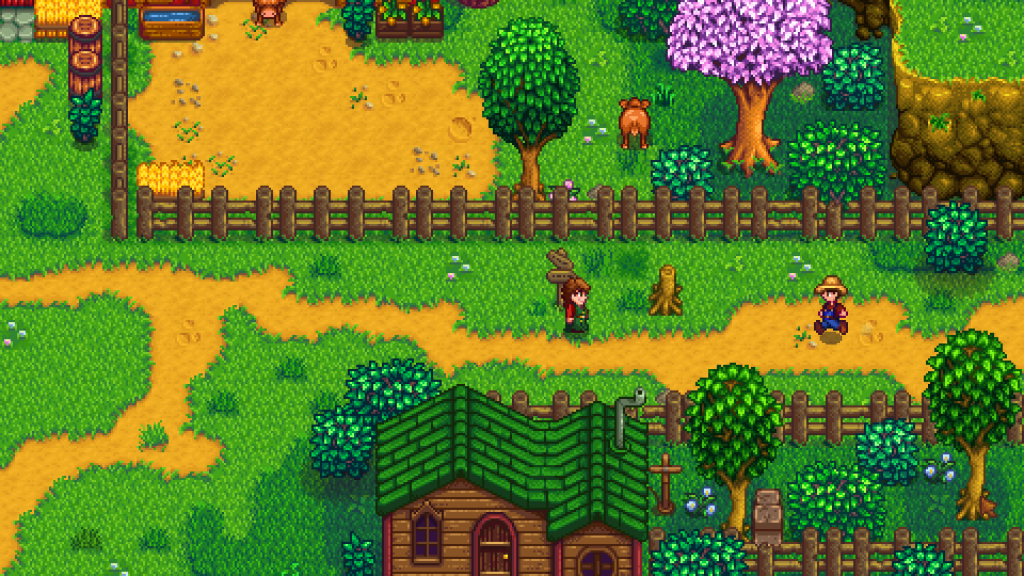
Stardew Valley is a farming and country-life role-playing game. Players inherit an overgrown farm, grow crops, raise animals, explore caves, craft items and build relationships with residents of a small town. Its design combines several loops: daily farm management, resource collection, exploration, character relationships and gradual restoration of the community.
The product did not need to invent farming simulation from scratch. Barone drew inspiration from older farming games, especially the early Harvest Moon titles, while building his own world, characters, music and systems. That is a useful product lesson: differentiation can come from execution, coherence and emotional connection—not only from inventing a new category.
3. The Development Timeline: Four Years Before Launch, Then Years of Updates
Before 2012: Barone was interested in making games and wanted to improve his programming skills. The original concept grew from a personal desire to create the kind of farming game he wanted to play.
About 2012–2016: He worked on the game for roughly four years. In his PC Gamer interview, he described repeatedly redoing art and other elements as his abilities improved, and estimated that he had spent thousands of hours on the project. The early versions were far from the finished product.
February 26, 2016: The game launched on PC. A contemporaneous PC Gamer interview reported roughly 400,000 copies sold in the first 12 days. The official press kit says it passed one million copies within two months.
2016–2019: The game expanded to Mac and Linux, then consoles and mobile. Multiplayer arrived later, with outside programming help. The project was no longer literally a one-person operation in every respect.
After launch: Barone continued adding content and improving the game. The official history notes that he formed a small team to help with later updates. This distinction is important: the original game was made solo, but maintaining and expanding a global hit eventually required collaboration.
December 2024: The official press page reported more than 41 million copies sold across platforms, including more than 26 million on PC and 7.9 million on Nintendo Switch.
4. How Did He Find Customers?
This was not a typical paid-ad acquisition funnel. The game reached players through a combination of storefront discovery, community interest, press coverage, word of mouth, creator content and continued platform availability.
- Storefront distribution: Launching on Steam and other PC storefronts placed the game in front of people already searching for indie games and farming simulations.
- Press and interviews: Early coverage focused not only on the game but on the unusual fact that one developer had made nearly every part of it. That made the story itself newsworthy.
- Player recommendations: A distinctive game loop and strong player attachment created reasons to recommend it to friends and online communities.
- Platform expansion: Console and mobile releases made the same product available to audiences who did not primarily play on PC.
- Ongoing updates: New content and improvements gave existing players reasons to return and gave gaming media new reasons to cover the game.
The conversion path was simple: discover the game through a storefront, review or recommendation; watch gameplay or read reviews; buy it once; then continue playing and recommend it. Unlike a subscription SaaS, the core purchase did not require a recurring billing relationship.
5. Business Model, Pricing and Economics
Stardew Valley is primarily a paid game sold through digital storefronts. The official press kit lists a regular US price of US$14.99, though regional prices, taxes and promotions can vary. The developer/publisher listing on Steam identifies ConcernedApe as both developer and publisher.
The basic model is a one-time purchase: customers pay to access the game, while platform distribution and payment arrangements determine the net amount received by the rights holder. There are also platform-porting, localization, support and ongoing development considerations. The game has had free content updates rather than relying on a constant stream of paid add-ons for its core identity.
What is not publicly established: I did not find a reliable public disclosure of Barone’s total lifetime revenue, net profit, personal take-home income, total development budget, platform-by-platform royalty rates or current operating costs. Multiplying 41 million copies by the US list price would not produce a valid revenue figure: copies were sold at different prices, across regions and storefronts, and gross consumer spending is not the same as developer receipts or profit.
6. Startup Cost and Scale: What Can We Actually Say?
The original development was funded through Barone’s own time and personal circumstances; a reliable itemized startup-cost figure is not publicly disclosed. His largest documented input was labor: around four years of development and thousands of hours, by his own account. Treating that labor as free would badly understate the real economic cost.
The scale is unusually well documented on the official press page: more than 41 million copies sold as of December 2024. That is unit sales, not revenue, profit, active users or personal wealth. It is also a dated figure; it should not be presented as a live November 2026 sales count.
For a small creator, the more useful financial lesson is that a paid digital product can have high upfront development cost and relatively low marginal distribution cost—but only after the creator has solved the hard problems of quality, discovery, platform compatibility, support and long-term maintenance.
7. Why Did It Work?
First, the audience already existed. Farming simulation fans understood the genre. Barone did not have to teach the market what the product was.
Second, the product had a clear emotional promise. It offered a slower, player-directed world built around routines, relationships and progress. In a 2024 NPR interview, Barone reflected that the game’s everyday activities—small routines and human connections—were part of its appeal.
Third, the scope was focused but deep. The game centered on a recognizable fantasy: build a life on a farm. Its systems reinforced that fantasy rather than pulling in unrelated directions.
Fourth, the creator kept improving it. The launch was not the end of the product. Years of updates extended its useful life and strengthened its community.
Fifth, the creator’s story reinforced the product’s identity. Players could see a coherent creative vision rather than a generic product assembled by an anonymous corporation.
8. Failure Modes and Risks: Why This Is Not a Repeatable Formula
- Survivorship bias: Many solo games spend years in development and never recover their cost. A famous hit is not a representative outcome.
- Opportunity cost: Four years of unpaid or underpaid work is a major risk. Most people cannot safely imitate that runway.
- Platform dependence: Storefront discovery, policies, fees, ranking systems and technical requirements can change.
- Maintenance burden: New operating systems, devices, translations, bugs and player expectations create ongoing work.
- Creative bottleneck: A solo creator can become the single point of failure for updates, support and business decisions.
- Rights and licensing: Music, fonts, art, localization, ports and third-party tools need clear rights. Inspiration from an older game is not permission to copy its protected assets.
- Non-replicable timing and taste: Barone’s particular design sensibility, persistence and market timing cannot be reduced to a checklist.
9. A Practical 7-Day and 30-Day Experiment for an Ordinary Creator
Do not begin by promising yourself four years of development. Test whether a narrow audience wants the result.
Days 1–2: Pick a small audience and a recognizable unmet need. Interview 10 potential users or players. Ask what they currently use, what frustrates them and what they have paid for.
Days 3–4: Build a tiny playable or usable prototype around one core loop. Avoid content volume and decorative features until the central interaction is enjoyable or useful.
Day 5: Publish a landing page with screenshots, a short demo and a clear promise. Start collecting email sign-ups or demo requests.
Day 6: Share the prototype in a few genuinely relevant communities, following their self-promotion rules. Ask for specific feedback rather than generic praise.
Day 7: Review evidence: how many target users tried it, how many completed the core task, where they stopped, and whether anyone asked to use it again.
By day 30: Aim for a small but meaningful test cohort—perhaps 30–50 target users. Track demo-to-wishlist or sign-up conversion, repeat use, completion rate, qualitative feedback and willingness to pay. For a game, measure whether players return and voluntarily recommend it; for a SaaS tool, measure whether users repeat the core workflow and pay for it. These are proposed experiment targets, not benchmarks attributed to Barone.
10. Five Lessons for One-Person Businesses
- Start with a market people already understand. A familiar category lowers the education burden; differentiation must come from the experience.
- Build depth around one promise. More features are not automatically more value.
- Show the product early. Real user reactions are more useful than private perfectionism.
- Budget for maintenance. A successful product creates obligations long after launch.
- Do not confuse sales with profit. Unit sales, gross revenue, platform receipts, operating profit and personal income are different numbers.
Sources and What They Verify
- Stardew Valley official press kit — creator, solo-development history, release timeline, platform expansion, official December 2024 sales figure and listed regular price.
- PC Gamer, March 2016 interview — Barone’s account of making the art, music, code and design himself, the four-year development period, early sales and his part-time theater-usher work.
- NPR / GBH interview, December 19, 2024 — Barone’s reflections on the game’s emotional appeal, solo launch and later small-team updates.
- Game Developer interview, February 24, 2017 — solo-development effort and reported daily work routine.
- Steam store page — current storefront description, developer/publisher attribution, release date and platform features.
Image credits: The two embedded game images are official Stardew Valley/ConcernedApe promotional assets sourced from the official media page and Steam store listing. They are copyrighted game materials, not images created by this article’s author. Their inclusion is editorial and does not imply ownership or a blanket reuse licence.